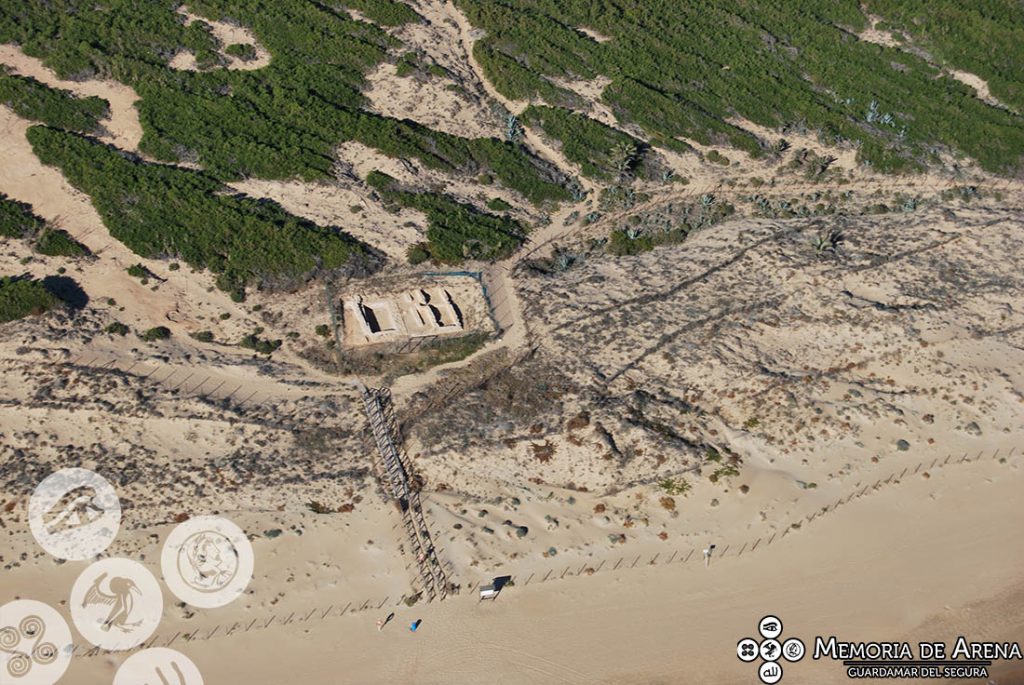
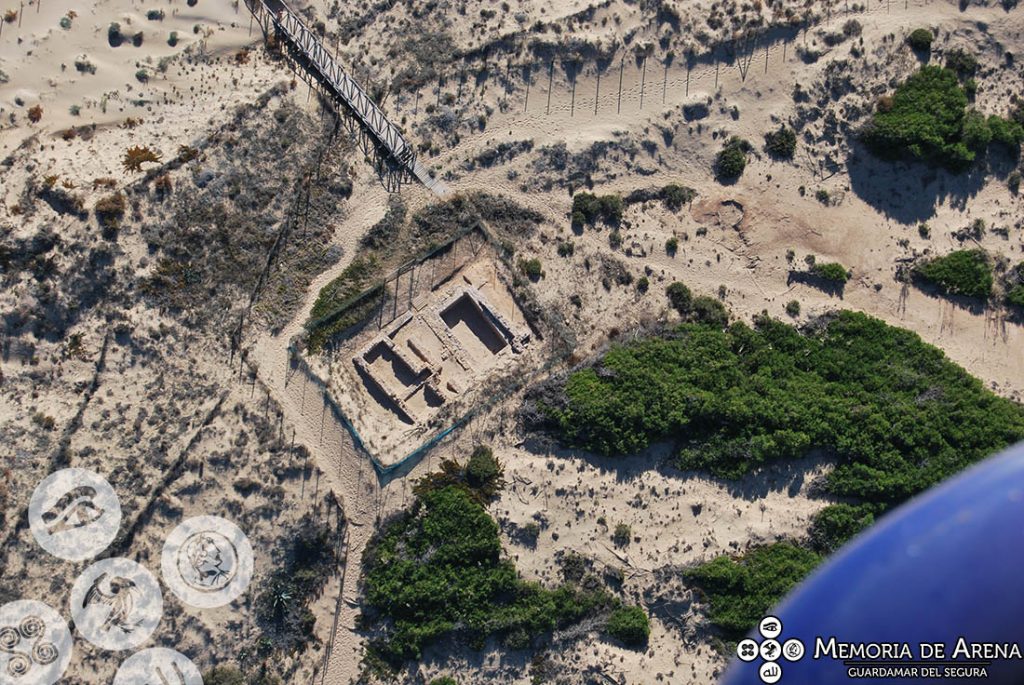
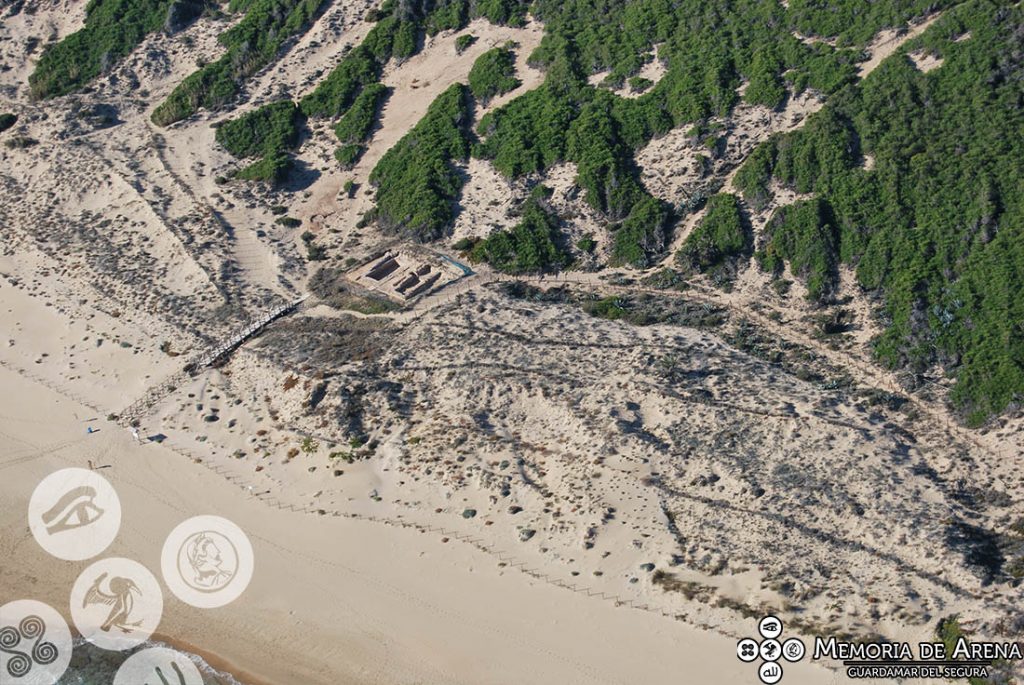
On El Moncaio beach, just three kilometres south of the town of Guardamar del
Segura, lies an outstanding archaeological site that spans more than a thousand years of
history. Only a few steps from the sea stand two closely connected landmarks: The
Roman Villa of Moncaio and the Torre del Descarregador, an Andalusi coastal
fortification. Excavations at both locations reveal a long Roman occupation followed by
a medieval Islamic phase.
The earliest settlement was a rural Roman villa, occupied from at least the 1st to the
5th centuries AD, probably devoted to farming and the use of marine resources.
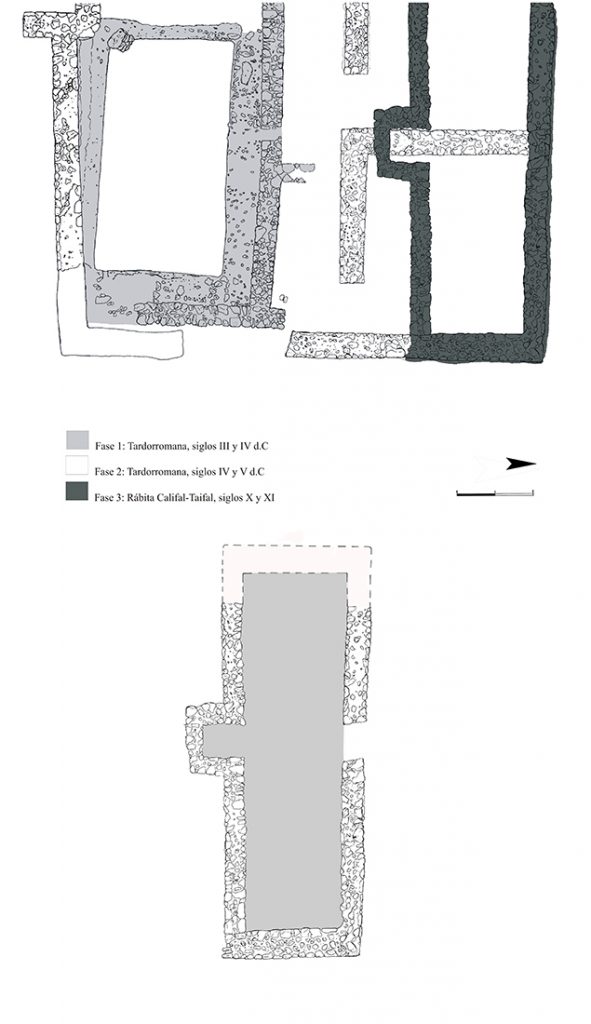
Remains include a large water cistern, a courtyard with side rooms, sturdy masonry
walls and a lime kiln. Its layout is striking: a complex, axial plan of square rooms
aligned along a broad corridor facing the sea, ending in two spacious apsidal
chambers typical of 4th-century villas, designed for receptions and social gatherings.
After a period of abandonment and spoliation, a small rural mosque was built here in
the 10th century, its mihrab carefully oriented toward Mecca to serve a scattered
Muslim population along the coast.
About 140 metres to the north rises the Torre del Descarregador (10th–11th
centuries), constructed directly over Roman foundations. With a rectangular footprint,
rammed-earth walls, a tripartite interior and a single protected entrance, the tower
served a dual purpose: coastal watchtower and storage facility for fish, salt and dry-
farmed produce. From this commanding position it offered sweeping views from Cape
Santa Pola to Torrevieja. After its abandonment, it saw occasional reuse in later
centuries.
Together, the Moncaio villa and the Torre del Descarregador illustrate the continuity of
coastal settlement—a landscape that evolved from Roman estate to Islamic stronghold,
mirroring the political, economic and environmental transformations of the western
Mediterranean.